For decades, two-dimensional cell culture has been a fundamental tool in biological and biomedical research. However, cells in the body do not grow as flat monolayers: they interact with neighbouring cells, extracellular matrix components, soluble factors, oxygen gradients and mechanical cues within a three-dimensional microenvironment. For this reason, increasingly advanced in vitro models are moving beyond traditional 2D systems toward 3D cell culture approaches based on spheroids and organoids.
Spheroids and organoids are laboratory-grown three-dimensional structures designed to reproduce selected aspects of tissues, tumours or organs more closely than conventional monolayer cultures. Although the two terms are sometimes used together, they refer to models with different levels of biological complexity: spheroids are typically compact 3D cellular aggregates, while organoids are self-organising structures that can partially recapitulate the architecture and function of specific organs.
What Are Spheroids and How Are They Formed?
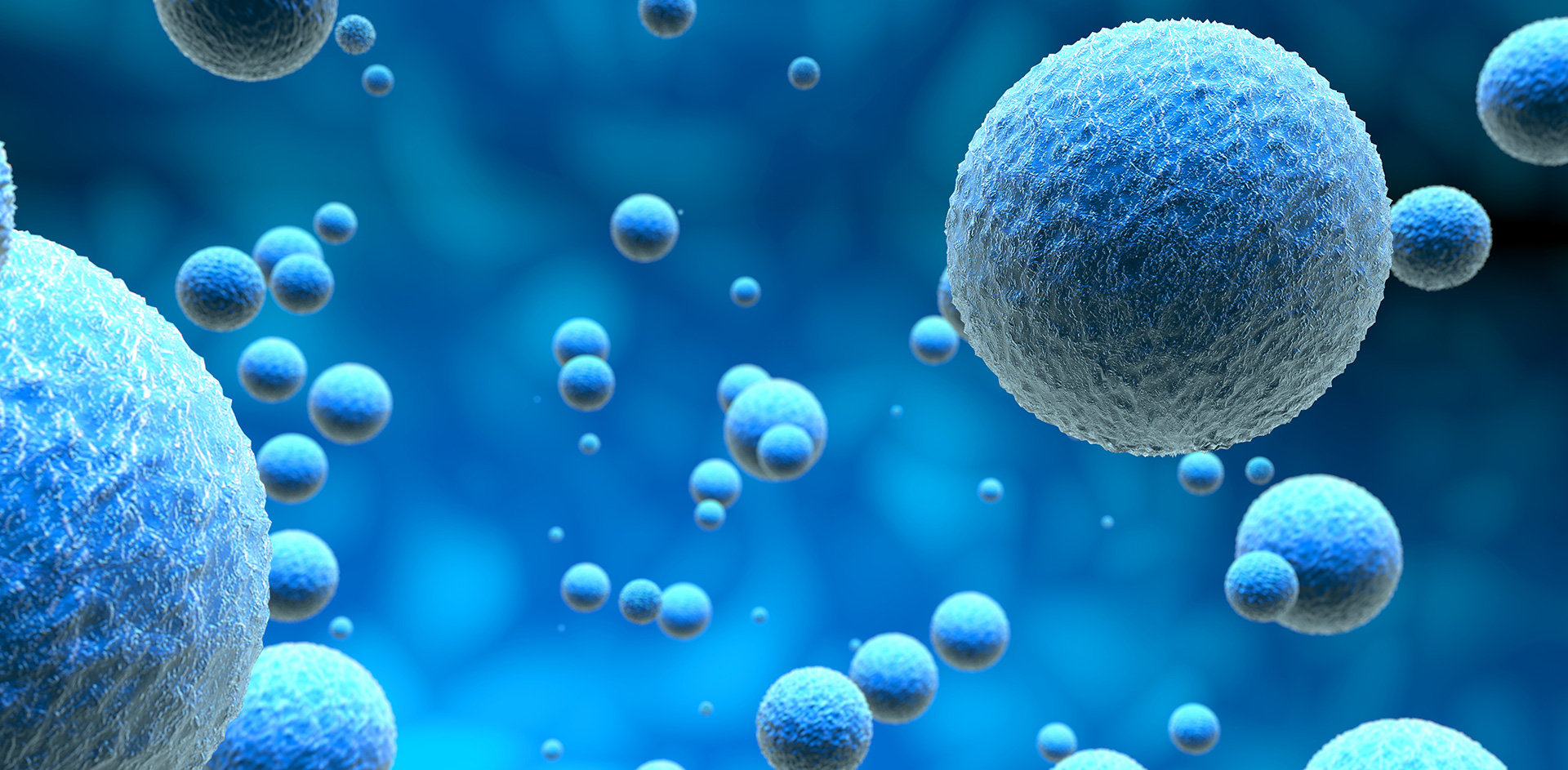
Spheroids are small three-dimensional cellular structures, generally spherical in shape, generated when primary cells, immortalised cell lines or mixed cell populations aggregate through cell-to-cell adhesion. Their formation can occur spontaneously or be promoted by dedicated culture techniques, including hanging-drop methods, microwell systems, hydrogels and low-attachment or ultra-low attachment plates designed to minimise adhesion to the culture surface.
Compared with 2D monolayers, spheroids provide a more realistic spatial organisation. Cells within the aggregate are exposed to different levels of nutrients, oxygen and signalling molecules, which can lead to gradients similar to those observed in native tissues or solid tumours. These characteristics make spheroids especially useful for studying proliferation, differentiation, cell viability, invasion, drug penetration, toxicity and response to therapeutic compounds.
Because they are relatively simple to generate, scalable and compatible with high-throughput workflows, spheroids are widely used in oncology research, toxicology screening, stem cell studies and preclinical drug development. Tumour spheroids, for example, can reproduce key features of solid tumours, including compact cellular organisation and reduced compound diffusion toward the core, helping researchers evaluate biological responses under more predictive experimental conditions.
What Are Organoids and How Are They Formed?
Organoids are more complex 3D culture models that develop from stem cells, induced pluripotent stem cells, adult stem cells, progenitor cells or tissue-derived cells. Under appropriate culture conditions, these cells can self-organise into structures that reproduce selected structural, functional and genetic features of the organ or tissue of origin.
Unlike spheroids, organoids are not simply aggregates of cells. They can display a higher degree of cellular diversity, tissue-like organisation and organ-specific functionality. Brain, intestinal, liver, lung, kidney and cardiac organoid models, for example, are used to investigate development, disease mechanisms, host-pathogen interactions, drug response and regenerative medicine strategies. Their ability to preserve key features of tissue architecture makes them particularly valuable when researchers need a model that more closely reflects organ-level biology.
The greater biological relevance of organoids is usually accompanied by more demanding culture requirements. Organoid generation often depends on defined growth factors, extracellular matrix support, precise media formulations and longer culture timelines. As a result, the choice between spheroids and organoids depends on the experimental objective: spheroids are often preferred for robust and scalable assays, whereas organoids are selected when tissue specificity, self-organisation and functional complexity are essential.
Cell Culture Requirements for Spheroids and Organoids
Both spheroid and organoid culture require conditions that support three-dimensional growth rather than cell spreading on a flat surface. This may involve low-adhesion cultureware, defined extracellular matrices, hydrogels, specialised media and growth factors that guide aggregation, survival, differentiation or tissue-like maturation.
Spheroid formation is commonly based on preventing cells from attaching to the vessel surface, thereby encouraging cell-to-cell aggregation. In this context, the quality and consistency of the culture surface are critical, because uncontrolled adhesion can result in irregular aggregates, variable spheroid size and reduced reproducibility. Organoid culture, on the other hand, often starts from stem or progenitor cells that require biochemical and mechanical cues to self-organise into more elaborate structures, frequently with matrix support such as Matrigel or other scaffold systems.
These 3D models are reshaping research in biology, pharmacology and medicine because they can provide more physiologically relevant information than traditional 2D cultures. They help bridge the gap between simplified in vitro systems and the complexity of living tissues, supporting more predictive studies of disease progression, therapeutic efficacy, compound toxicity and personalised medicine approaches.
How GVS Supports This New Frontier in 3D Cell Culture
For spheroid and organoid workflows, cultureware surface performance is a decisive factor. GVS Ultra-Low Adsorption Surface is designed to support 3D cell culture applications by minimising protein adsorption and cell attachment to the culture surface. This helps maintain cells in suspension and promotes cell-to-cell interactions that are essential for the formation of consistent spheroids and other 3D aggregates.
The surface is prepared through a specialised gel treatment that provides strong anti-protein adsorption and anti-cell adhesion properties. By reducing unwanted attachment, it supports rapid, consistent and reproducible spheroid culture, including applications such as 3D tumour spheroid models and organoid-related workflows. This is particularly important in experimental settings where uniformity, scalability and repeatability are required for reliable downstream analysis.
By combining low-attachment performance with formats suitable for advanced cell culture, GVS provides researchers with a practical platform for developing more representative 3D models. As spheroids and organoids continue to expand their role in biomedical research, reliable culture surfaces will remain essential for improving experimental reproducibility and translating in vitro findings into more meaningful biological insights.
Contact us for more information or to speak with one of our specialists, who will be able to recommend the most suitable solution for your needs or browse our catalogue here.
Sources
O. Chepizhko, J. Armengol-Collado, S. Alexander, E. Wagena, B. Weigelin, L. Giomi, P. Friedl, S. Zapperi, & C.A.M. La Porta, Confined cell migration along extracellular matrix space in vivo, Proc. Natl. Acad. Sci. U.S.A. 122 (1) e2414009121, https://doi.org/10.1073/pnas.2414009121 (2025)